
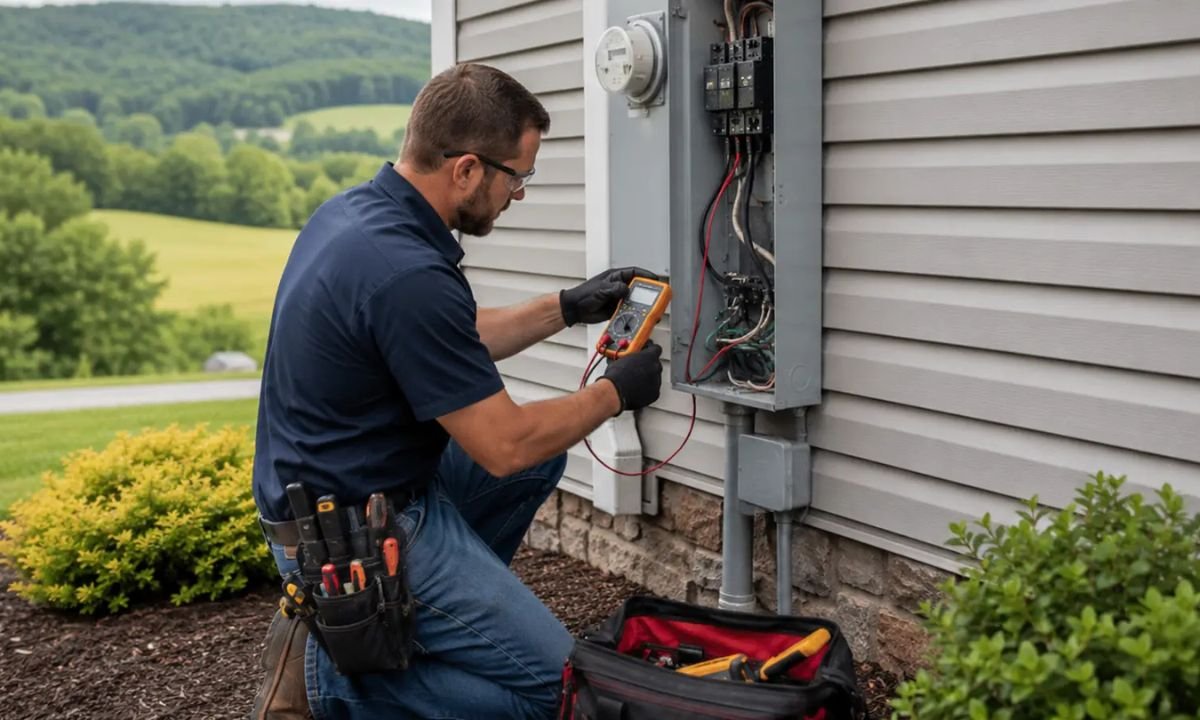
Exterior wiring in Chiswick’s period homes was often added decades after the houses were built.
Any repairs or retrofitting thus pose challenges, especially given the exposure to the specific environmental pressures and effects of West London.
Here are the 5 most common faults that turn up again and again, along with how dangerous each one is and how best to address it.
- Outdoor Sockets With No RCD Protection
Outdoor sockets on older circuits often have no RCD protection. Current wiring rules (BS 7671) expect a 30mA RCD on sockets that could power garden equipment, but plenty of Chiswick terraces had theirs fitted long before that applied.
Without one, a nicked mower cable or a wet plug can pass current straight through you, making it a major hazard.
An RCD cuts the power in a fraction of a second. That’s often the difference between a nasty fright and a serious injury. You should know that the damp weather makes the risk even worse. Outdoor sockets get splashed often, and wet plugs are thus quite common.
Older sockets also get pushed into new jobs, such as patio heaters, pond pumps and festive outdoor lights. That extra use makes the lack of protection even harder to ignore.
What’s to be done then? First, check your fuse board for an RCD or RCBO protecting the outdoor circuit. Press its test button every few months. If it doesn’t trip, treat the circuit as unprotected.
A plug-in RCD adaptor is a short-term fix for portable tools, but it doesn’t protect the circuit itself. A registered Chiswick electrician can usually add proper protection without rewiring the whole house.
- Old, Shallow Or Damaged Garden Cable
Buried cable is the hazard you can’t see until something goes wrong. Many period homes still have garden cable laid decades ago, often without armouring or a protective duct. As you well know, soil moves, roots grow, and old insulation turns brittle with time.
Long, narrow gardens mean cable runs can be lengthy. And, if you’re into gardening, a spade through a live cable is a real risk you mustn’t take.
On top of that, patios and borders are often redone, so old routes are easily forgotten. This means the number 1 rule is this: never dig where a cable might run until it has been traced.
On top of that, rodents, frost and heavy planters can also damage cable over time. Warning signs include:
- Lights or tools that cut out when the ground is wet;
- A circuit that trips after rain;
- Damp or warm patches along a known cable route;
- Cable showing at the surface after digging or heavy rain.
Modern outdoor runs use armoured cable, buried at a safe depth with warning tape above it. Anything older should be tested and, where needed, replaced. An electrician can trace the cable route with a detector before any digging starts.
- Water Getting Into Outdoor Lights And Fittings
Outdoor fittings need an IP rating that suits the spot. IP44 is a common minimum for lights and boxes exposed to splashes, while IP65 suits places that take driving rain.
Period-style lanterns are popular on porches and rear walls, but cheaper ones aren’t always built for the West London weather.
Cracked seals, loose lenses and unsealed junction boxes all let water in. Signs like condensation, rusty screws and flickering after rain give the problem away. Porch lights and security lights are the usual culprits, because they sit in the open all year.
As you well know, water and live parts don’t mix. It can trip the circuit or corrode connections, and sometimes it makes metal parts live.
All outdoor connections belong in sealed enclosures, and tape or silicone isn’t a substitute. Fortunately, swapping a failed fitting for a correctly rated one is usually quick, and far simpler than repairing damaged wiring behind it.
So, check seals each spring and autumn. In conservation areas such as Bedford Park, visible external changes may require consent, so ask the council before swapping fittings on a front elevation.
- Weak Power Supplies To Sheds, Garages And Garden Rooms
An outbuilding needs its own properly protected supply.
Plenty of garden offices and sheds run on a thin cable spurred off an indoor socket, or on an extension lead fed through a back door. That setup can quickly overheat when a heater, a kettle, and a laptop charger are all running together.
Extension leads wear quickly outdoors, and a trapped lead is easy to damage. Dimming lights or a warm plug is an early warning. So, keep in mind that a garden room used for work or heating needs a supply sized for the load, not just any cable that reaches.
A safe supply starts at the main fuse board. It needs its own protective device, RCD protection and armoured cable to the building, plus a switch at the house end so power can be cut fast in an emergency.
Adding a new circuit like this usually requires notification under the Building Regulations (Part P) in England. A registered electrician can certify the work, which also helps when the house is sold.
- Weak Earthing And Outdated Fuse Boards
Outdoor circuits are only as safe as the fuse board behind them.
Partial rewires are common in older Chiswick homes, so a modern-looking socket can still sit on a circuit with old protection or poor earthing. Circuits were often added piecemeal over the years, so the wiring behind the walls rarely follows one tidy plan.
Metal items outdoors, such as lamp posts, metal-cased lights and steel outbuildings, need a proper earth connection. If that link is missing or corroded, a fault can leave the metal live. It may feel fine until someone touches it with wet hands.
Rewirable fuses, cracked casings and a fuse board with no RCD at all strongly suggest an upgrade is overdue. A new consumer unit will greatly improve the protection on every circuit, indoors and out, so it’s strongly recommended to get one if you can and need it.
An Electrical Installation Condition Report (EICR) tests earthing, RCDs and circuits, including outdoor ones. Results are graded, so you’ll see which issues need urgent attention and which can wait.
Landlords in England need one at least every 5 years. Homeowners are usually advised to have one every 10 years, or sooner when buying a period property.
Conclusion
As you can see, outdoor electrics in older Chiswick homes all deserve a proper look before the garden gets busy again.
Walk round and check sockets, lights and any outbuilding supply for the signs above. Then book an EICR with a registered electrician. Ask them to test every outdoor circuit.
Remember that small faults cost far less to fix now than after a shock or a fire, so make that call and keep the report safe.
 Decor Drip