
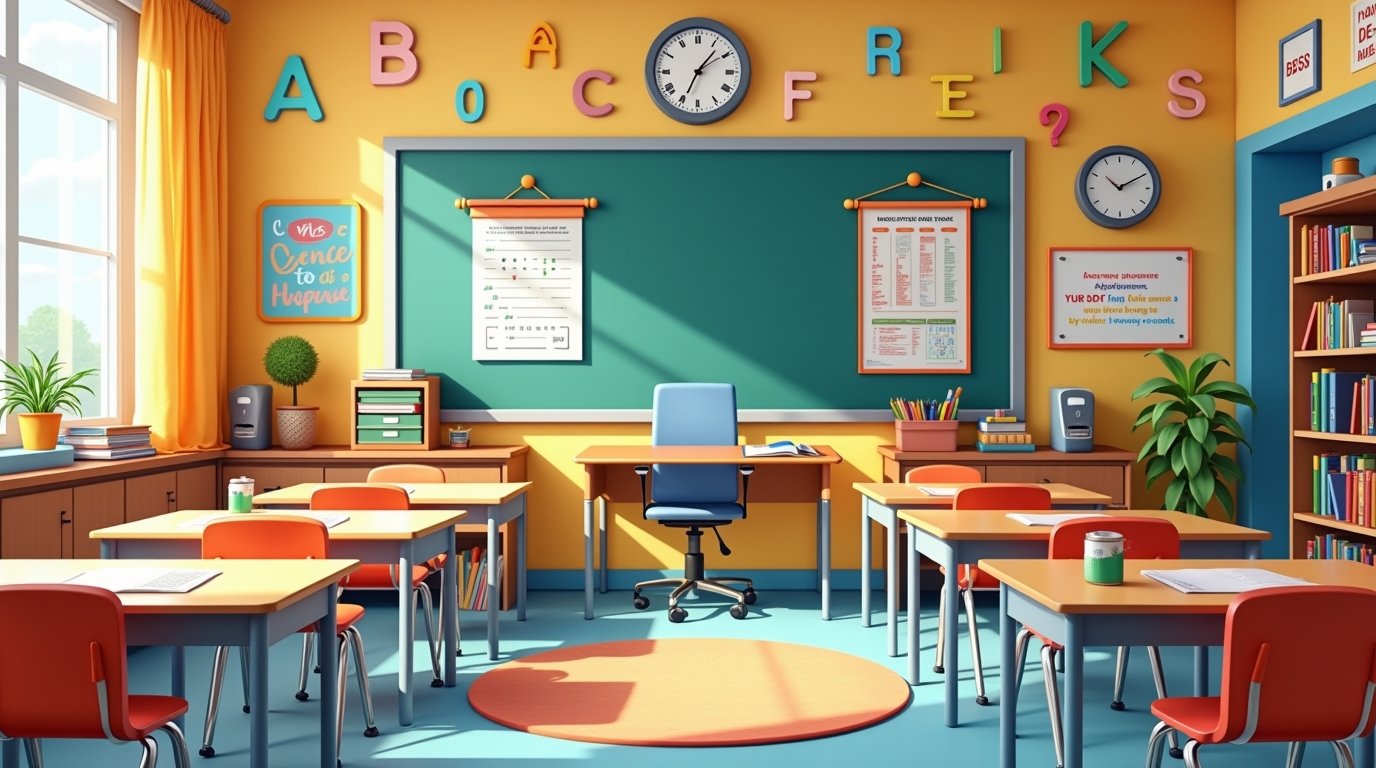
Hey there, amazing educator! Whether you’re a veteran setting up for year twenty or a brand-new teacher staring at an empty room in August, that annual question eventually pops up: “How do I decorate my first grade classroom?” It’s exciting, but let’s be real—it can also be totally overwhelming.
Your first grade classroom decor needs are about so much more than just being “cute.” It’s about creating a warm, welcoming, and incredibly functional space that supports little learners as they build foundational reading, writing, and math skills. This guide is here to move you from overwhelmed to inspired, offering practical, teacher-tested ideas that blend aesthetics, organization, and learning support seamlessly. Let’s create a space where both you and your students will thrive!
Beyond Cute: The Real Goal of First Grade Classroom Decor
It’s easy to get lost in a sea of brightly colored, themed decor on social media. But before you click “buy now” on that giant bundle, let’s reframe our thinking. The most effective elementary classroom setup is one where the environment acts as a “third teacher.”
Think about your core first grade classroom decor needs: you need a space that is organized, reduces visual clutter, and empowers students to be independent. A place where they know where to find supplies, how to read the room for information, and feel calm and safe enough to take academic risks. The colors, layouts, and displays you choose should all serve that master goal. It’s not about a perfect Pinterest board; it’s about a purposeful learning environment design.
The Foundation: Calm, Cozy, and Controlled
The atmosphere of your room sets the tone for the entire school year. For six- and seven-year-olds who are easily overstimulated, a calm environment is key.
- Choose a Cohesive Color Palette: Instead of using every color in the rainbow, pick two or three main colors and one or two neutrals. A palette of light blue, green, and white with natural wood accents is far more calming than neon brights. This doesn’t mean it has to be boring! You can still have a fun theme—like a tropical paradise or a cozy forest—within a calming color scheme.
- Lighting is Everything: The harsh glare of overhead fluorescents can put everyone on edge. Teacher hacks like using floor lamps, string lights, or even just covering lights with cheap blue translucent tablecloths from the dollar store can create a soft, cozy glow.
- Define Spaces with Rugs: A large rug for your whole-group meeting area is a must. It defines the space and builds community. Smaller rugs can also help define other areas, like your literacy centers decor or math zone.
Must-Have Zones: Mapping Out Your Classroom’s Flow
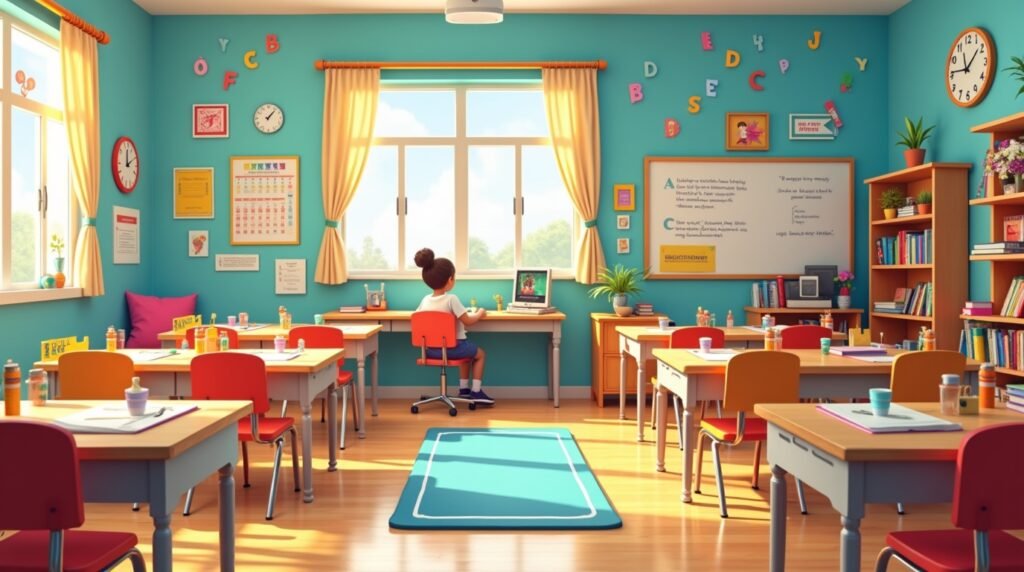
A well-organized room has a natural flow that guides students through their day. Think about creating distinct zones for different types of learning. This is the heart of a functional classroom.
The Whole Group Meeting Area
This is the heart of your classroom. It’s where you’ll launch your lessons, read stories, build community, and share ideas.
- The Anchor Chart Wall: Dedicate a large, easy-to-see wall or bulletin board for your instructional charts. Use it for your daily schedule, phonics charts, and math strategies. This is a functional display wall that students will reference constantly. Make sure it’s at their eye level!
- Your Teaching Spot: Have a small chair or stool, an easel for chart paper, and a caddy with your read-aloud books and markers. Keep it simple and uncluttered.
Small Group & Learning Centers
First graders need to move and learn through play and collaboration. Flexible seating options and clearly defined centers make this possible.
- The Teacher Table: This is your command center for small-group instruction. Have all your grade level teaching supplies for reading and math groups within arm’s reach: whiteboards, markers, letter tiles, manipulatives, and lesson plans.
- Literacy & Math Centers: Use low bookshelves, area rugs, and simple signs to define these spaces. For organizing materials for first grade classroom, use clear bins with picture and word labels. This empowers students to clean up independently.
- Flexible Seating Options: You don’t need a huge budget. Offer choices like clipboards for working on the floor, a low table with cushions, or a few wobble stools. This gives students agency over their learning space.
The Cozy Corner: A Calm-Down & Library Nook
Every first-grade classroom needs a quiet retreat for students who feel overwhelmed or just need a minute alone.
- Softness is Key: Add a small tent, a comfy bean bag chair, or a pile of pillows.
- Include Tools: Have a “calm down kit” with a feelings chart, fidget toys, and social stories. This is a crucial part of creating a cozy and calm first grade classroom.
- Integrate Your Library: Place your classroom library nearby to keep the area quiet. Organize books in bins by genre, topic, or reading level.
Walls That Work: Functional Display Ideas
Your wall space is valuable real estate! Every display should have a job, whether it’s to teach, celebrate, or inform.
Student Work Displays
Nothing makes a room feel more like a community than showcasing student work.
- Simple is Best: Use clothespins on a string or ribbon for an easy-to-change display. No need for fancy, pre-printed borders for every piece. A simple black or neutral background makes the colorful student work pop.
- Give it a Purpose: Label displays with titles like “Authors in Progress” or “Mathematicians at Work.”
Instructional & Anchor Walls
These are your functional display walls. They should be packed with information students use daily.
- Word Wall: This is a kindergarten classroom essential that continues into first grade. Make it interactive by using velcro dots so words can be added and removed. Organize it alphabetically to teach dictionary skills.
- Number Line & Alphabet: Keep these up all year! A number line that goes to 120 is perfect for first grade. For the alphabet, use a student-facing version with clear pictures for letter sounds. You can find amazing printable posters for first grade classroom that fit any theme.
- Learning Objectives: Use an “I Can” statement board to post your daily or weekly learning goals in kid-friendly language.
Teacher-Tested Organization Hacks
Let’s talk about the secret to a smooth-running day: classroom organization ideas that actually work.
Taming the Paper Monster
Papers are a fact of teaching life, but they don’t have to take over.
- In/Out Trays: Use a labeled tiered cart or stackable trays for student work. “Turn In,” “Needs Fixing,” “Go Home.”
- Student Mailboxes: This is a non-negotiable for managing papers going to and from home. Use a stackable paper sorter or plastic bins.
- Your Teacher Binder: Go digital or analog, but have a single place for your lesson plans, pacing guides, and meeting notes.
Organizing Teaching Supplies
Knowing where your stuff is will save your sanity.
- Clear Bins are Your Best Friend: Store your grade level teaching supplies—like math manipulatives, craft materials, and science kit supplies—in clear, labeled bins. You can often find these cheap at dollar stores or big-box retailers.
- Label Everything: Use both pictures and words on your labels. This supports emergent readers and makes cleanup a breeze. It’s a key part of organizing materials for first grade classroom success.
- DIY Solutions: Repurpose shoe organizers for art supplies, use a utensil caddy for shared table supplies, and muffin tins for sorting small items like brads and erasers.
Bringing It All Together: A Checklist for Success
Feeling inspired but not sure where to start? Use this checklist for new teacher first grade classroom decor needs to guide your process.
- Define Your Zones: Map out your whole group, small group, centers, library, and calm corner.
- Choose a Calming Color Palette: Select 2-3 main colors and stick to them.
- Set Up Your “Command Centers”: Your whole group meeting area and small group teacher table.
- Plan Your Functional Walls: Word wall, number line, alphabet, and student work displays.
- Invest in Storage & Labels: Get clear bins and create picture-word labels for everything.
- Add Softness & Light: Incorporate lamps, rugs, and pillows to soften the space.
- Shop Your Own Storage First: Before you buy new, see what you already have that can be repurposed.
Remember, your classroom will evolve throughout the year. It doesn’t have to be perfect on day one. Let the space grow with your students, reflecting their work and their learning. By focusing on these practical back-to-school first grade classroom decor needs, you’ll create a space that is not only beautiful but truly built for learning. Now, take a deep breath, put on some music, and start transforming your room into the incredible learning oasis it’s meant to be!
You May Also Like: Peel and Stick Wallpaper on Wallpaper: A Practical Guide
 Arthur