
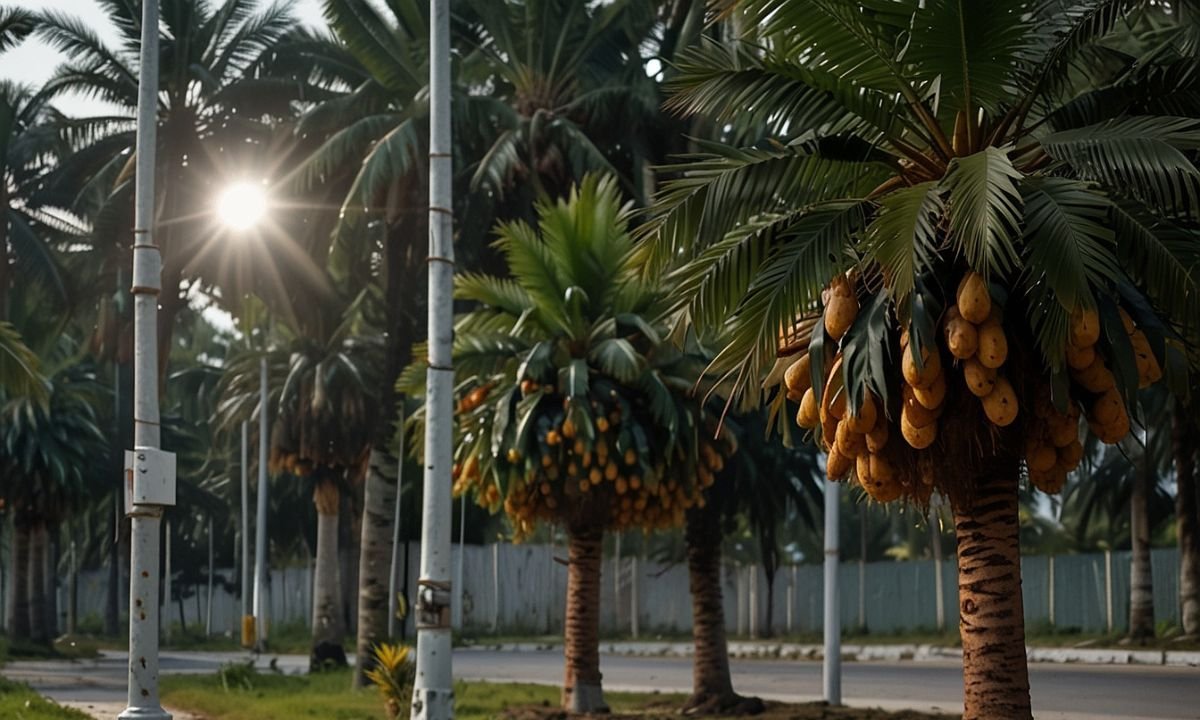
In the vast palm oil plantations of Nigeria, Malaysia, Indonesia, and across Africa’s palm belt, street lighting faces a constant battle against dust, oil mist, pollen, and humidity. Traditional systems require frequent, costly cleaning, while unreliable grids leave rural roads dark at night. Enter self-cleaning streetlight oil palm waste solutions that combine advanced solar technology with biomass energy from agricultural byproducts.
These innovative systems use self-cleaning solar panels to maintain peak efficiency in challenging environments and repurpose oil palm waste like empty fruit bunches (EFB) for biomass energy. This creates a closed-loop approach to renewable energy synergy. For environmental engineers, renewable energy stakeholders, government officials, and urban planners in tropical regions, this represents a practical path to sustainable urban infrastructure that cuts maintenance costs, lowers the carbon footprint, and turns waste into value.
This article explores how self-cleaning streetlight oil palm waste systems work, their benefits, real-world applications, and why they are gaining traction in palm-oil-producing areas.
What Are Self-Cleaning Streetlight Oil Palm Waste Systems?
Self-cleaning streetlight oil palm waste systems integrate solar-powered lighting with automated panel maintenance and biomass-derived energy components. In palm plantations, airborne oil mist and dust can slash solar panel efficiency by 30-40% within months. Self-cleaning designs counter this with nano-coatings, robotic brushes, or wiper systems that activate automatically.
Biomass integration comes from oil palm byproducts. Empty fruit bunches, palm kernel shells, and mill effluent convert into biofuels, biogas, or pellets that can power hybrid generators or support microgrids feeding the lights. This waste-to-energy technology creates true renewable energy synergy.
These lights are ideal for remote plantation roads, mills, and rural communities where grid access is limited and manual maintenance is expensive.
How Self-Cleaning Streetlight Oil Palm Waste Systems Work
Understanding the technology reveals its elegance and practicality.
Core Components
- Solar PV Panels with Self-Cleaning Features: High-efficiency monocrystalline panels feature hydrophobic nano-coatings that repel dust and oil. Automated robotic arms or brushes sweep the surface daily, using minimal stored energy (often under 2% of daily output).
- Energy Storage: Long-life LiFePO₄ batteries provide 3-5 days of autonomy during cloudy periods common in tropical climates.
- LED Fixtures: Efficient 160-200 lm/W lights with smart dimming for energy savings.
- Biomass Backup: Gasifiers or biodiesel generators using processed oil palm waste (EFB pellets or biogas from POME) kick in as needed for hybrid reliability.
- Smart Controls: MPPT controllers, IoT sensors for remote monitoring, and programmable cleaning cycles.
Step-by-Step Operation
- Daytime: Panels capture sunlight and charge batteries while the self-cleaning mechanism activates at midday to remove debris.
- Evening: Sensors trigger LEDs at optimal brightness levels.
- Biomass Integration: Waste from nearby mills feeds a small gasifier or generator, producing syngas or electricity to supplement solar during low-light periods.
- Monitoring: Operators track performance remotely, adjusting schedules for seasonal dust or rain patterns.
This setup ensures consistent lighting with near-zero manual intervention.
Benefits of Biomass for Solar Streetlights
Pairing self-cleaning solar with oil palm waste delivers multiple advantages:
- Reduced Maintenance Costs: Automated cleaning slashes labor needs by up to 90%, saving hundreds of dollars per unit annually in remote areas.
- Carbon Footprint Reduction: Biomass from EFB is near carbon-neutral as it recycles recently absorbed CO₂. Systems can cut emissions by 0.4 tons of CO₂ per lamp yearly versus diesel alternatives.
- Waste Utilization: Palm mills generate massive EFB volumes (roughly 1 ton per ton of palm oil). Converting this prevents methane emissions from decomposing piles and creates local energy.
- Energy Independence: Hybrid setups provide reliable power even in prolonged cloudy weather, supporting sustainable urban infrastructure in off-grid zones.
- Economic Gains: Local biomass processing creates jobs in collection, pelletizing, and maintenance while lowering fuel import costs.
Renewable energy synergy like this turns agricultural challenges into infrastructure assets.
Self-Cleaning Streetlight Oil Palm Waste Initiatives in Nigeria
Nigeria, a major palm producer, leads adoption. In Port Harcourt, a landmark project deployed BOSUN self-cleaning solar street lights along plantation roads. Engineers addressed high humidity, dust, and oil mist with anti-dust coatings and robotic cleaning.
Results included sustained 95% energy output, reduced maintenance visits, and improved safety for nighttime logistics. Neighboring states like Abia and Akwa Ibom are expanding similar systems. Broader African palm belt interest grows in Ghana, Côte d’Ivoire, and Cameroon.
These initiatives align with national goals for rural electrification and climate action, demonstrating waste-to-energy technology in action.
Reducing Maintenance Costs with Self-Cleaning Solar Lights
Maintenance often dooms solar projects in dusty tropics. Self-cleaning models change the equation:
- Automated Cycles: Daily dry brushing or wiping prevents buildup without water (valuable in water-scarce areas).
- Durable Design: IP66-rated housings and corrosion-resistant poles withstand oil mist and rain.
- IoT Optimization: Real-time data lets teams focus resources efficiently.
- Long-Term Savings: Lower downtime and extended equipment life deliver strong ROI for governments and plantations.
Planners report significant drops in operational expenses, freeing budgets for more installations.
Utilizing Agricultural Byproducts for Smart City Lighting
Oil palm waste powers the next generation of smart lighting:
- EFB Processing: Shredding, drying, and pelletizing creates solid fuel for gasifiers.
- Biogas from POME: Anaerobic digestion of palm oil mill effluent yields methane for generators.
- Hybrid Smart Systems: Biomass supplements solar for motion-sensing, dimmable lights integrated into broader smart city networks.
This approach supports biomass energy conversion while advancing sustainable urban infrastructure in tropical regions.
Pro Tip: Start small with pilot projects near existing mills to test local waste quality and train crews.
Implementation Guide: Deploying These Systems
- Site Assessment: Analyze solar resources, waste availability, dust loads, and road needs.
- Technology Selection: Choose self-cleaning solar with biomass hybrid options.
- Community Involvement: Engage local farmers for waste supply chains.
- Installation: Use modular poles for quick setup in remote areas.
- Monitoring & Scaling: Leverage IoT for data-driven expansions.
- Policy Support: Seek subsidies for renewable projects and sustainable palm practices.
Common pitfalls include underestimating biomass preprocessing needs or ignoring seasonal variations. Partner with experienced providers to avoid them.
Challenges and Solutions
- Sustainability of Palm Oil: Ensure RSPO-certified or equivalent practices to prevent deforestation.
- Technical Capacity: Train locals for maintenance and processing.
- Initial Costs: Hybrids may cost more upfront but pay back quickly through savings and grants.
- Emissions Control: Use efficient gasifiers and proper biodiesel refining.
With careful planning, these hurdles become opportunities for green growth.
The Future of Renewable Energy Synergy in Palm Regions
Self-cleaning streetlight oil palm waste systems exemplify how innovation bridges biomass energy conversion and smart lighting. As tropical nations pursue net-zero goals, these solutions offer scalable, locally rooted answers.
They reduce maintenance, utilize waste, enhance safety, and cut emissions while boosting local economies. For stakeholders in Africa and Southeast Asia, now is the time to invest in this technology.
Ready to light up your palm belt sustainably? Contact renewable energy experts or pilot a project in your region today. The synergy of sun, waste, and smart design is ready to transform infrastructure—one illuminated road at a time.
 Arthur