
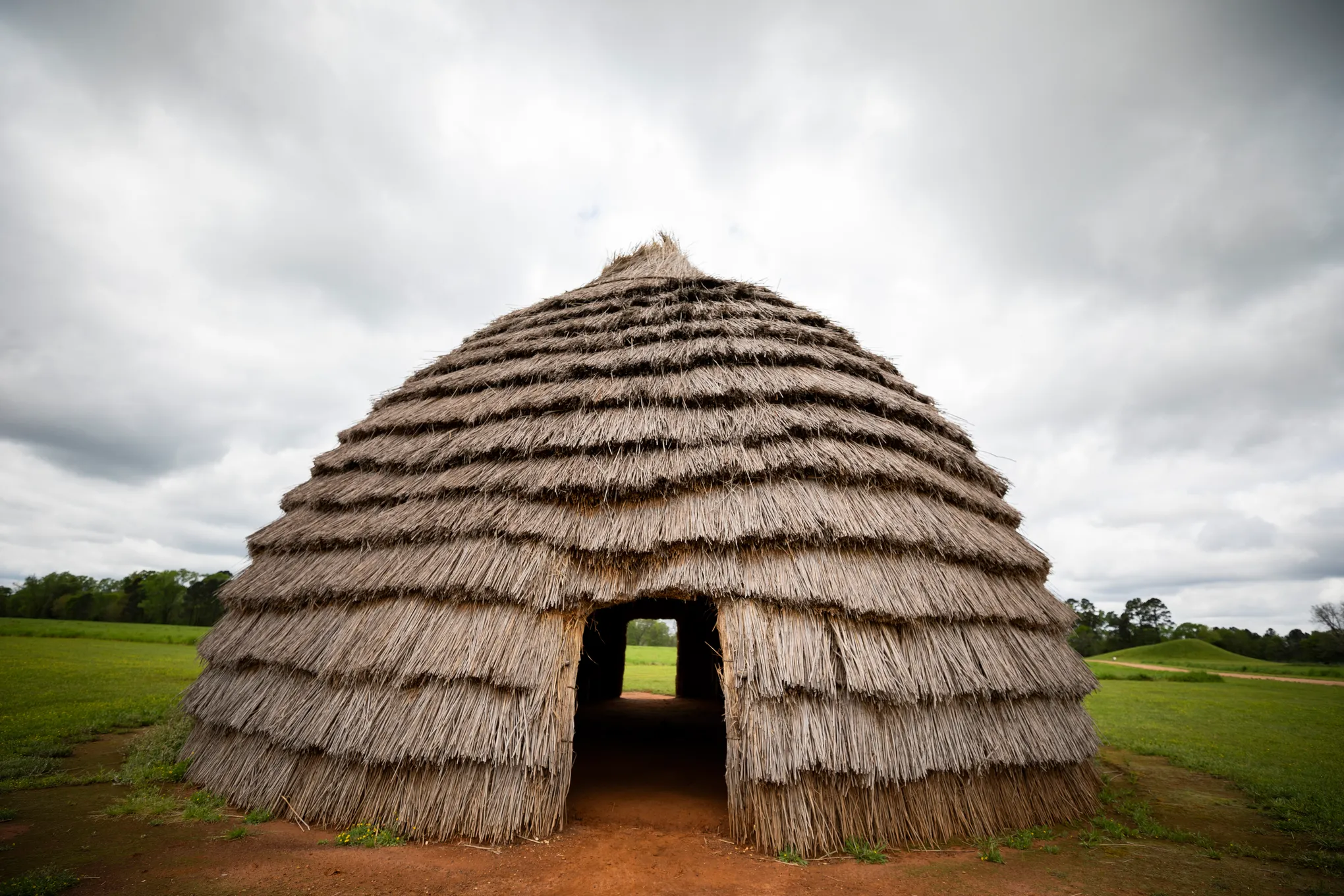
Imagine a vast sea of golden grass stretching to the horizon in the Southern Plains. Rising from this landscape are unique, beehive-shaped houses, their roofs thick with prairie grass, creating a scene unlike any other in Native America. For the Wichita people, their homes were far more than just shelter; they were a central part of their identity, perfectly adapted to their environment and semi-nomadic way of life. This article will answer the question, “What type of home did the Wichita Tribe live in?” by exploring their iconic grass houses, the temporary tipis used for hunting, and the ingenious seasonal cycle that defined their culture. We’ll delve into the architecture, construction, and deep cultural meaning behind these remarkable dwellings.
The Wichita Grass House: A Masterpiece of Southern Plains Architecture
When people ask, “What type of home did the Wichita Tribe live in?” the most immediate and striking answer is the grass house. These were not small, temporary huts but large, semi-permanent structures that could house entire extended families. To the Wichita and other Caddoan tribes, these dwellings were a symbol of community and a testament to their deep connection to the land.
Unlike the portable hide-covered tipis often associated with Plains tribes, the Wichita grass lodge was a sturdy, domed home designed to last for years. Early European explorers were often astonished by their size and complexity, sometimes comparing their appearance to large haystacks. This unique form of Wichita architecture was a direct response to their environment and social structure.
Key Features of the Grass Lodge
So, what made these homes so special? Let’s break down their defining characteristics:
- Domed Shape: The rounded, conical form was aerodynamic, helping the structure withstand the strong winds that sweep across the Great Plains.
- Spacious Interior: A typical grass lodge could be 30 to 50 feet in diameter, providing ample space for a family of 10-12 people and their belongings.
- Thick Grass Thatch: The dense, layered thatch provided superb insulation, keeping the interior cool during blistering summer heat and remarkably warm during the cold winters.
- Permanent Foundation: Unlike a tipi, a grass house was built to stay in one place for a long time, forming the heart of a settled village.
Building a Home from the Prairie: Materials and Construction
The Wichita were master builders who used materials sourced directly from their environment. The construction of a grass house was a community effort, showcasing shared knowledge and skill. The primary materials were simple yet incredibly effective.
The Framework: Cedar Poles
The skeleton of the house was built from sturdy, flexible cedar poles. These were preferred for their straightness, strength, and resistance to rot. The process began by setting a circle of large primary poles into the ground. These were then bent inward and lashed together to form the dome’s frame. Smaller cross-poles were woven horizontally through the vertical ones, creating a strong, lattice-like grid that would firmly hold the thatching.
The Blanket: Bluestem Grass
The most iconic material was the grass itself—specifically, the tall, durable bluestem grass that covered the prairie. In massive community efforts, people would gather great bundles of this grass. It was then carefully layered onto the wooden frame, starting from the bottom and working upward, much like shingling a roof. Each layer was tied to the frame, creating a thick, waterproof, and insulating blanket that could be several feet thick.
The Final Touches: Entryway and Hearth
Every home had a thoughtfully designed east-facing entrance, which provided protection from the prevailing westerly winds. Inside, the floor was often dug down slightly to create more headroom and improve insulation. A central fire pit served as the heart of the home, used for cooking, heat, and light. A hole in the roof directly above allowed smoke to escape. Raised beds were arranged around the interior walls, with storage pits dug into the floor for preserving food and other items.
A Two-Home Life: Understanding Seasonal Dwellings
To truly understand Wichita housing, you must grasp their seasonal cycle. The Wichita were not fully nomadic, but semi-sedentary. This means they had two primary types of homes for different parts of the year, a practice that optimized their survival.
The Permanent Village: Summer in the Grass Lodge
For most of the year, the Wichita lived in their substantial grass houses, which were clustered together to form large, permanent villages. These villages were often located near rivers, providing access to water for drinking, farming, and fishing. Here, they practiced agriculture, growing crops like corn, beans, and squash in large gardens. The grass lodge was the center of family and community life during this time.
The Mobile Camp: Winter on the Buffalo Hunt
When the great buffalo herds moved into their territory, the Wichita would embark on a seasonal hunt. For this mobile phase, the heavy grass houses were impractical. Instead, they used tipis (or tipi-like skin tents) that were easy to pack, transport, and set up. These temporary dwellings provided the portability needed to follow the buffalo, which was essential for securing enough meat and hides to last through the winter.
This cycle of moving between a permanent dwelling and a temporary one is a key aspect of Southern Plains culture and a brilliant adaptation to the region’s resources.
More Than a Shelter: The Cultural Significance of the Grass House
The Wichita grass house was deeply woven into the fabric of their culture. It was more than just a place to sleep; it was a living space that reflected their worldview, social structure, and spiritual beliefs.
The circular shape of the home represented the circle of life and the universe. The orientation of the door to the east honored the rising sun, a source of life and spiritual power. The structure itself was seen as a microcosm of the world, with the central fireplace representing the center of their existence. Building and maintaining a home was a sacred act that reinforced community bonds and cultural identity for the Wichita Confederacy.
How to Build a Wichita Grass House: A Step-by-Step Process
While a full-scale construction is a major undertaking, understanding the process highlights the ingenuity of Wichita engineering. Here is a simplified step-by-step guide based on historical accounts.
- Site Selection and Preparation: A level site near water and resources was chosen. A circular area was cleared and leveled.
- Setting the Main Posts: A circle of 12-16 large, sturdy cedar posts were sunk deep into the ground to form the primary vertical supports.
- Creating the Dome: Smaller, flexible poles were bent inward from the main posts and lashed together with tough sinew or plant fibers, forming the dome’s arched frame.
- Adding the Lattice: Horizontal poles were woven through the arched ribs to create a strong, cross-braced grid. This grid would hold the thatch securely.
- Thatching the Roof: Huge bundles of bluestem grass were prepared. Starting at the bottom, the grass was layered thickly onto the frame, with each new layer overlapping the one below it to shed water. The grass was tied down with strips of bark or hide.
- Finishing the Interior: A central fire pit was dug, and a smoke hole was left open at the top. Earthen beds were built along the walls, and a covered entryway was constructed facing east.
The Legacy of the Wichita Grass Lodge
The unique grass houses of the Wichita Tribe stand as a powerful symbol of their adaptability and deep understanding of the Southern Plains environment. They successfully balanced a settled agricultural life in their spacious, permanent lodges with a mobile hunting lifestyle using portable tipis. By understanding these dwellings, we gain a greater appreciation for the rich and complex culture of the Wichita people, whose architectural legacy remains a fascinating subject for students and history enthusiasts alike. To see these structures today, we encourage you to visit a museum or cultural center with reconstructed examples, where the skill and artistry of this unique architecture truly come to life.
You May Also Like: 10 Best 4 Bedroom Barndominium Floor Plans