
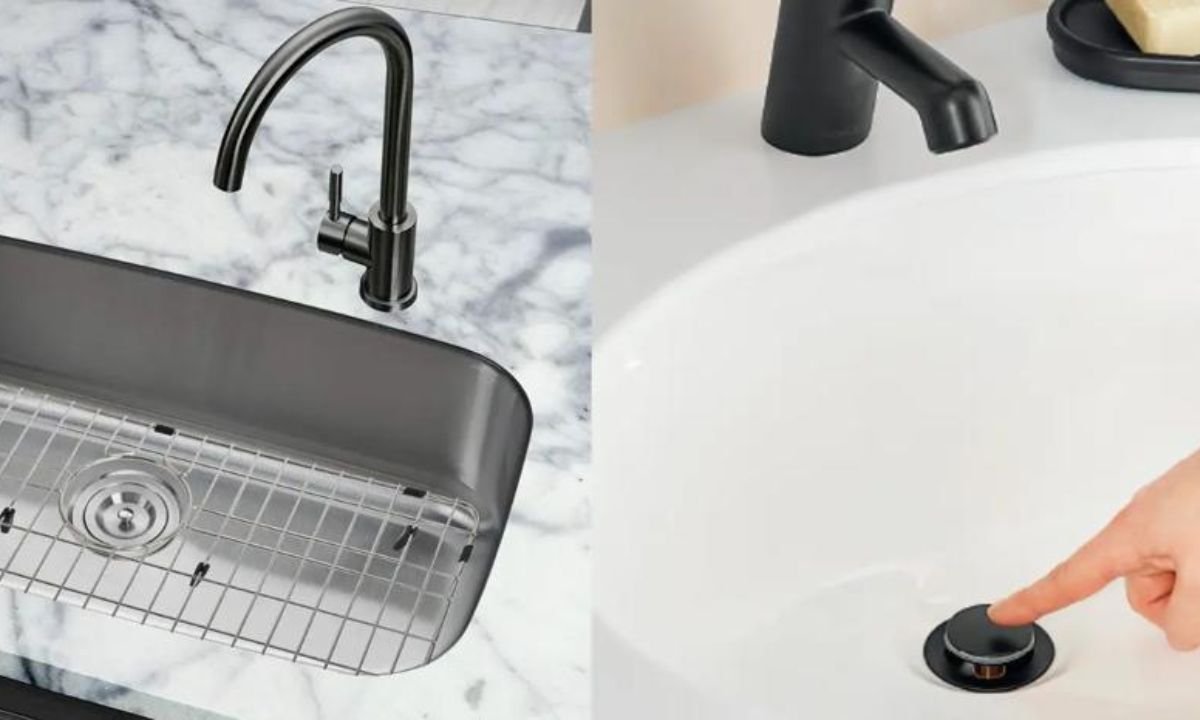
It’s a small detail. Almost forgettable.
Until you actually start using the sink.
That’s usually when this question shows up—pop-up vs grid drain—and suddenly it matters more than expected. Not because one is wildly better than the other. It’s just that they behave differently in everyday use. And those little differences… they add up.
I’ve seen this happen a lot. People pick whatever comes with the sink or looks decent in photos. Months later, they’re either dealing with clogs or wondering why they can’t fill the basin when they want to.
So yeah, worth getting right the first time.
What Is the Difference Between a Pop-Up Drain and a Grid Drain?
At the simplest level, it comes down to this:
A pop-up drain has a stopper you can open or close. A grid drain doesn’t. It just keeps draining, always.
That’s really it. But that one distinction affects everything else—maintenance, cleaning, even how you use the sink day to day.
When comparing different types of sink setups, it also helps to understand how these drains connect with other essential bathroom sink parts. The drain assembly works together with components like the sink flange, tailpiece, overflow system, and P-trap to keep water flowing properly. Whether you choose pop-up or grid-style sink drains, making sure every part is compatible with your sink design can save you from drainage issues and maintenance problems later on.
What Is a Pop-Up Drain?
This is the standard setup most people already know. Nothing new here.
If you’ve ever pulled a little rod behind the faucet to hold water in the sink… that’s a pop-up drain.
How It Works
There are a few versions floating around:
- The lift rod system, where a rod behind the faucet moves a linkage underneath
- The pivot rod setup, which connects everything under the sink
- Or the newer push-pop style, where you just press the stopper
Different designs, same idea—something moves, and the drain opens or closes.
Advantages of Pop-Up Drains
There’s a reason these are everywhere.
You can actually hold water in the sink. That alone makes them useful for things like shaving, rinsing, or just filling the basin for whatever reason.
Also, there’s familiarity. People don’t have to think about how it works. It just does.
And having control—open, close, partial drain—some people care about that more than they realize.
Common Problems
This is where things get less appealing.
Hair tends to wrap around the stopper. Not immediately, but give it some time. Soap residue builds up too. It’s not dramatic at first, then suddenly it is.
Sometimes the stopper gets stuck. Or doesn’t seal properly anymore.
And then there’s the pivot rod underneath. Small part, easy to ignore, but it’s one of those spots where leaks can show up if something loosens or wears out.
Cleaning isn’t hard… just a bit annoying. You usually have to pull things apart, which most people postpone longer than they should.
What Is a Grid Drain?
Now this is the opposite approach.
No stopper. No mechanism. No moving parts. Just a metal cover with holes in it.
Water goes in. That’s it.
How It Works
There’s not much to explain, honestly.
- A fixed grid sits over the drain
- Water flows through continuously
- Nothing opens or closes
It’s almost too simple, which is kind of the appeal.
Advantages of Grid Drains
First thing people notice—less clogging.
Hair doesn’t get tangled around a stopper because there isn’t one. Debris still collects, sure, but it’s easier to deal with.
Maintenance is lower. You’re not dealing with hidden parts or small mechanical pieces.
Cleaning is straightforward. Wipe the top, occasionally clear underneath, done.
And visually… it tends to look cleaner. Especially in modern setups or vessel sinks.
Limitations
But there’s an obvious trade-off.
You can’t hold water. At all.
If you ever need to fill the sink—even occasionally—that option is gone.
Also, debris can sit just under the grid. Not a major issue, but it’s still something you’ll need to clean eventually.
Pop-Up vs Grid Drain: Side-by-Side Comparison
Here’s how it stacks up without overthinking it:
| Feature | Pop-Up Drain | Grid Drain |
| Can hold water | Yes | No |
| Maintenance | Moderate | Low |
| Clogging risk | Higher | Lower |
| Cleaning ease | Moderate | Easy |
| Best for | Traditional setups | Modern / minimal sinks |
Nothing surprising here. It mostly reflects how each one is designed.
Which Drain Is Better for Your Bathroom Sink?
This is where it gets practical.
Not theoretical—just how you actually use your sink.
Choose a Pop-Up Drain If:
You fill the sink sometimes. Even occasionally.
Or you just prefer having that option.
Also, if you like a more traditional setup, this is still the standard.
Choose a Grid Drain If:
You never really block the drain anyway.
A lot of people think they need a stopper… until they realize they haven’t used it in months.
If low maintenance matters, or you just want something simpler, grid drains make more sense.
They’re also a good fit for guest bathrooms or powder rooms where functionality stays basic.
Overflow vs Non-Overflow Compatibility (Important)
This is the part people skip. And it causes problems.
Take a second and check your sink.
Look near the top inside edge. If there’s a small hole—that’s an overflow.
No hole? Then it’s a non-overflow sink.
Why This Matters
Drains are built differently depending on that.
If you mismatch them, water won’t behave the way it should. You might get slow drainage. Or small leaks that aren’t obvious right away.
Worst case, water ends up where it shouldn’t.
Not complicated, just easy to overlook.
Common Mistakes When Choosing a Sink Drain
Most mistakes aren’t about picking pop-up vs grid.
They’re about everything around that decision.
- Not checking overflow compatibility
- Guessing the size instead of measuring
- Mixing finishes that don’t match
- Assuming all threads are universal
- Going with the cheapest option available
That last one… people regret it more often than they expect.
Frequently Asked Questions
Is a grid drain better than a pop-up?
Not really “better.” Just easier to maintain. Pop-up drains offer more control, which some people still want.
Do grid drains clog less?
Usually, yes. There’s no stopper for debris to wrap around. But you’ll still need to clean it occasionally.
Can I replace a pop-up with a grid drain?
In most cases, yes. As long as the size and overflow type match your sink, it’s a straightforward swap.
Are pop-up drains harder to clean?
They can be. The internal parts collect buildup, and cleaning often means taking things apart.
Which drain is best for vessel sinks?
Grid drains tend to work better. Vessel sinks don’t usually need water retention, and the simpler design fits the look.
Final Thought
This isn’t really about which drain is “right.”
It’s about how you use your sink when no one’s thinking about it.
Do you fill it? Do you care about cleaning effort? Do you just want something that works without attention?
Answer those, and the choice usually makes itself.
And yeah—once it’s installed, you probably won’t think about it again.
Which is kind of the point.
 Decor Drip